Coral Restoration Intern
Growing a Reef One Coral at a Time
Most people see a coral reef.. Few people ever see what it takes to keep one alive. Coral restoration isn't simply diving and attaching coral to the ocean floor. It's long days underwater, careful monitoring, data collection, cleaning nursery structures, removing algae, documenting coral health, and understanding that meaningful restoration happens one fragment at a time. During my internship, I had the opportunity to step into that process and contribute to restoring one of the most valuable ecosystems on our planet.
What Coral Restoration Really Looks Like
Healthy coral reefs support nearly 25% of all marine life while protecting coastlines, supporting fisheries, and sustaining millions of people worldwide. Yet reefs are declining at an unprecedented rate due to climate change, pollution, disease, and destructive human impacts. Restoration cannot solve these problems on its own, but it has become an important tool for rebuilding damaged reefs while scientists and conservationists work toward larger environmental solutions. As an intern, I learned that restoration is built on consistency rather than dramatic moments. Every dive served a purpose, and every small task contributed to something much larger.
Internship Highlights
• Coral nursery maintenance and cleaning • Coral fragment collection and propagation
• Out planting nursery grown corals onto degraded reef sites • Coral health monitoring and documentation
• Fish and invertebrate observations • Scientific diving and underwater navigation
• Reef surveys and environmental monitoring • Working alongside marine biologists, dive professionals, and conservation practitioners
A Typical Day Underwater
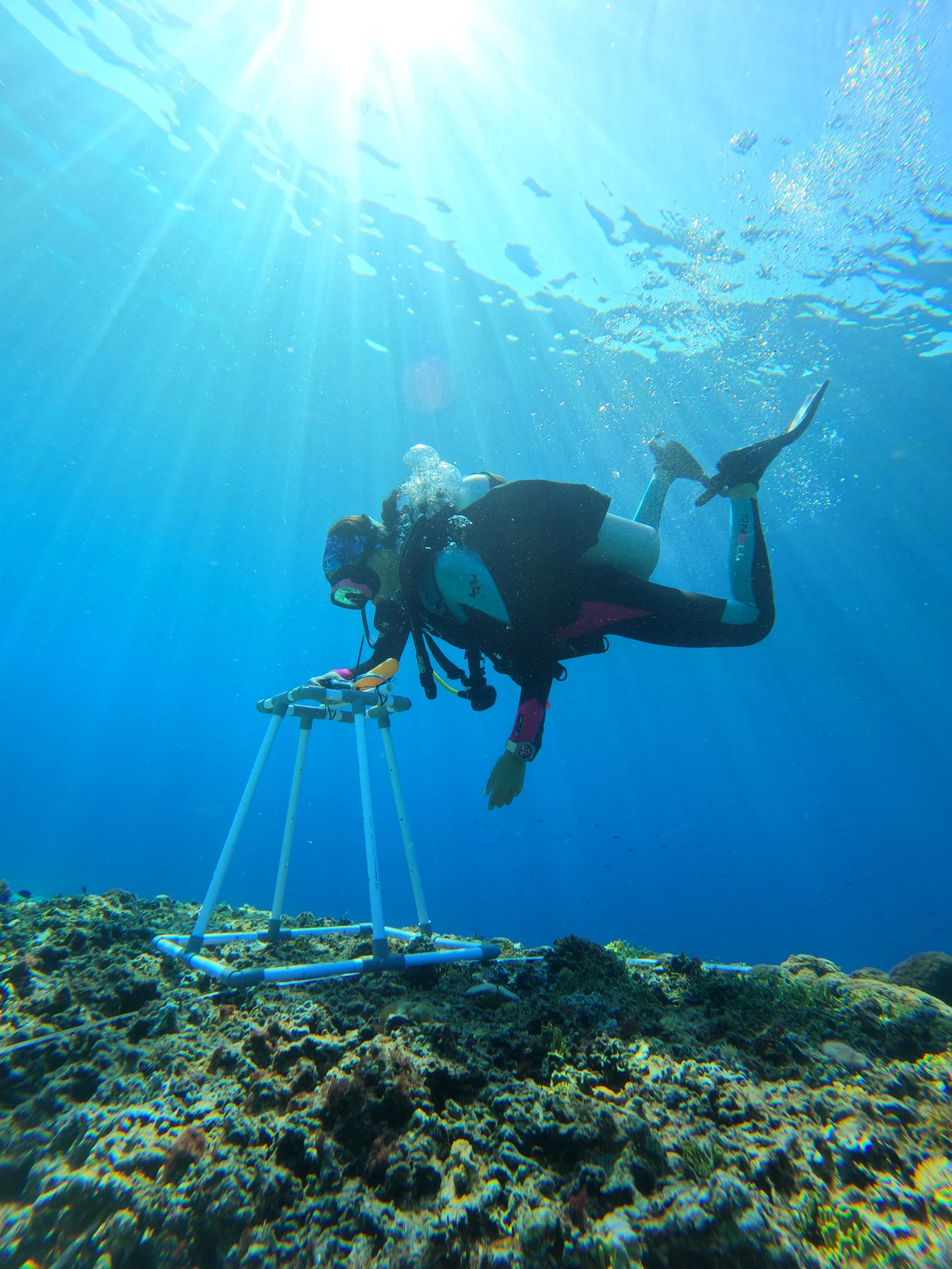
3-D mapping
Transects, go pro, program assitance
The Biggest Lesson I Took Away
People often imagine conservation happening through major discoveries or groundbreaking research. The reality is much quieter. It's cleaning algae from coral trees. Checking the same colony week after week. Recording data that may not seem significant on its own. Planting fragments that won't become thriving colonies for years. Conservation isn't built on one extraordinary moment. It's built on thousands of ordinary ones, repeated consistently by people who care enough to keep showing up. That realization changed the way I think about protecting the ocean. One of the greatest privileges of this internship wasn't simply learning how to restore coral. It was witnessing what hope looks like underwater. Every fragment planted represents the belief that damaged ecosystems can recover when people are willing to invest the time, patience, and care required to help them. That is a lesson I'll carry with me long after this internship ends.
